Top Construction Risks and How to Reduce Them
In a construction project, it is essential to exercise caution when assessing Construction Risks. At any level of construction, effective risk management is an important aspect. Not only are risks identified, but it is ensured that they are also controlled and corrected.
In addition to that, proper risk management is a necessity in any construction project. The more extensive the risk management strategies are, the fewer possibilities there are for any ambiguous likelihood. That being said, it is typical to confuse the term risk with a hazard of uncertainty.
DISCOVER WITH US WHAT RISKS ACTUALLY MEAN IN THE REALM OF CONSTRUCTION!
Construction Risks – Defining the Term
In construction, a risk is a predicted outcome that is based on a calculated probability. If the probability of a risk is higher in construction, it means that the chances of failure are higher. Thus, any probability that can jeopardise a construction project’s progress and finances is classified as risk.
For an efficient know-how about the top risks in construction and how they can be resolved, read the following article.
Prominent Risks in Construction & Their Solution
Cost Overruns
This is one of the most common and impactful risks for any construction project. The reason for its significant impact is that a minor cost overrun in any stage of a construction project will trickle down and disrupt the budget. The reason can be a design change, market and price volatility, or inadequate cost estimation.
How Can it Be Fixed?
The remedy for this risk can be achieved by the following:
- In-depth Construction Estimation with contingency funds
- Thoroughly survey the site to identify any potential issues
- Cost estimates tracking by using estimation software
- From time to time, review the budget and compare it with the expenditure
2) Schedule Setbacks
The construction project needs to be completed and delivered on time. If a delay occurs, apart from incurring more expenses, it will affect the relationship with a potential client. The factors that may evidently cause delays are weather, lack of resources, and a possible lack of coordination
How to solve it?
- Incorporate the critical path method to identify any potential shortcomings, and set up a realistic duration
- Add extra time to the deadline of a project to efficiently tackle any unfavorable weather conditions
- Do not rely on a single supplier rather than have a backup
- Keep monitoring and comparing the progress against set schedules
3) Quality Deficiencies
In construction, this risk causes a potential threat, as it is only visible after a large amount of work is done. The main causes of this risk are unskilled labour, poor quality materials, and insufficient supervision. These deficiencies can, if not vigilantly handled, may require expensive rework.
How to solve it?
- Before hiring labour, proper scrutiny of the workforce must be done
- Quality control measures that dictate certain quality standards must be applied to materials
- A detailed vetting process of the subcontractor must be conducted to ensure their competence
- Clearly state and communicate quality standards to eliminate any ambiguity.
4) Design Revisions
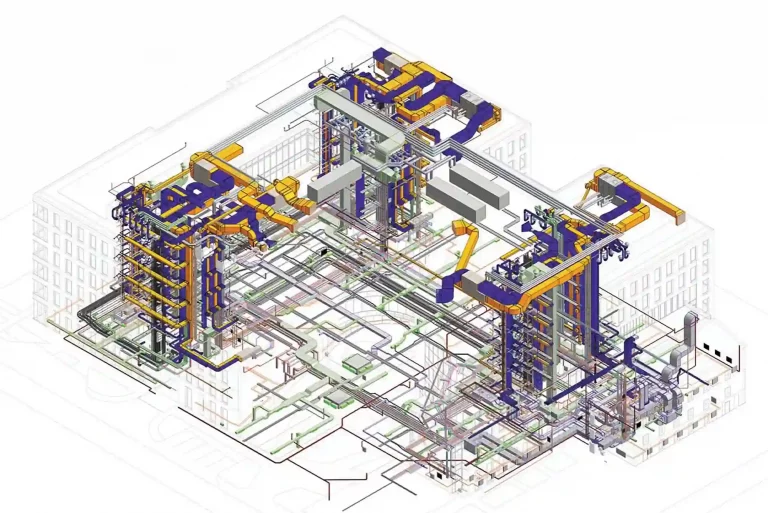
And sudden revisions in the construction project’s design will impact the construction workflow. In other words, any revision will lead to delays, more expense, and rework. There is also a probability that a design change will affect other sections. An example of such a scenario is the MEP system.
How can it be sorted?
- Extensively plan for the development of the design
- Utilize Building Information Modeling and other virtual design tools
- If a change in design happens, do a Blueprint Takeoff and record every aspect of the change before implementation
- Keep track of the change to identify its effect on the overall construction design
5) Workforce Challenges
Although the construction industry is booming, the construction workforce risk is on the rise as well. There is a shortage of skilled construction workers. And, the unskilled labour force is a major concern that greatly contributed to comprehensive workflow productivity.
How to Reform it?
- Start by organizing skilled training programs for the workforce
- Offer ample incentives to attract and retain a competent workforce
- Pre-fabricated or modular construction can be utilized to reduce the need for the workforce
6) Improper Safety Protocols
Construction is a line of work in which the workers are always surrounded by various risks. It can be a fall, an equipment incident, or not having proper safety gear.
How can Safety be Ensured?
- Ensure that appropriate safety gears are provided to the workers.
- Undertake safety training sessions
- See that the standards set by OSHA, or the Occupational Safety and Health Administration, are implemented.
- Make sure that the construction site has been audited for safety reasons
7) Miscommunication
If communication between stakeholders does not occur in a construction project, a variety of issues can arise. Not only will mistakes happen, but confusion between professionals can lead to conflict. Especially in a difficult project, misunderstandings can translate to costly mistakes
How to Make it Right?
- Set clearly defined communication protocols right from the start
- Have regular meetings to ensure to community the progress of construction
- Use project management tools with a unified platform that contains all the latest information
8) Regulatory Adherence
Any level of construction project requires the associated permits.Such permits will ensure that everything is carried out while following regulations regarding the construction. Therefore, failure to comply with the same may attract huge fines and/or result in the order to stop the construction process.
How Can it be Solved?
- Engage with the relevant regulatory authority from the design phase
- Add in permitting approval time while setting up your task schedules
- Stay updated regarding any changes in the regulations
- Ensure that all the construction documentation is organized for inspections.
SOLVE ALL YOUR RISK PROBLEMS BY CREATING A COMPREHENSIVE RISK MANAGEMENT PLAN!
Closing Remarks
Evidently, the construction sector is filled with risks despite appropriate planning. As a result, risk management approaches should be developed and implemented. During the planning process, a risk assessment of the construction process should be undertaken. In addition, all the stakeholders should be incorporated, which ensures that all are on the same page. The objective of the process is to identify all potential risks prior to embarking on the construction process. Once a risk is identified, its impact is analyzed, and corrective measures are applied by formulating mitigative risk strategies.